
Bee health
AFBI provides scientific and laboratory support to the Department of Agriculture, Environment and Rural Affairs (DAERA) bee health inspectorate.
AFBI support
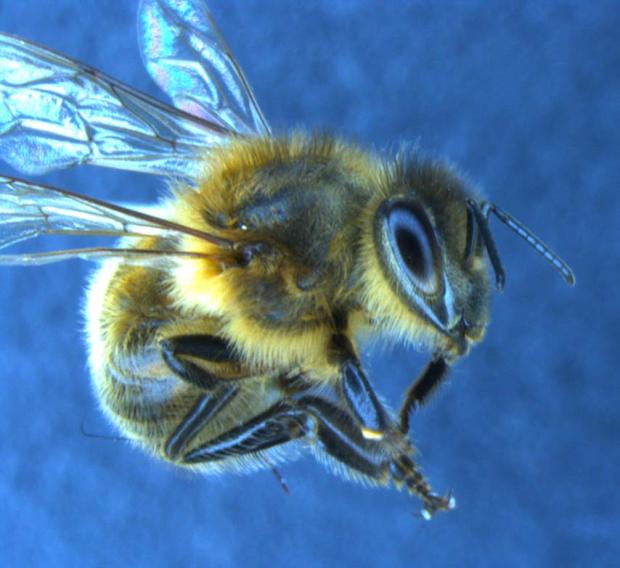
Support includes identification and diagnosis of a number of pests and diseases:
- American and European foulbrood (Paenibacillus larvae and Melissococcus eplutonius) (notifiable diseases)
- Varroa mite (Varroa destructor). This parasitic mite was first detected in the UK in 1992 and Northern Ireland in 2002. Varroa is no longer a statutory pest and therefore, no inspections are carried out specifically for it. Nevertheless due to its impact on the industry, this parasite’s prevalence and management remain an integral aspect of bee health strategies.
- Acarine disease (Acarapsis woodi)
- Nosema (Nosema apis)
Less common diseases include: viruses (sac brood, Acute Paralysis Virus, Chronic Paralysis Virus) and fungal diseases such as chalkbrood (Ascosphaera apis) and stonebrood (Aspergillus flavus).
Among the potential threats facing beekeeping in Northern Ireland are:
- Small hive beetle (Aethina tumida), which is native to Africa but has spread to USA and Australia.
- Tropilaelaps mites (T. clareae and T. mercedesae).
Both of the above are notifiable pests. In the case of imported queen bees, AFBI provides laboratory examinations of attendant bees and packaging to ensure imports are pest and disease free.
The statutory aspects of this work are carried out under The Bee Diseases and Pests Control Order (Northern Ireland) 2007.
Information on testing for honeybee pests and diseases with a bee sample submission form is available here:
Testing for Honeybee Pests and Diseases - Bee sample submission form
Asian Hornet, a potential threat to honey bees in NI
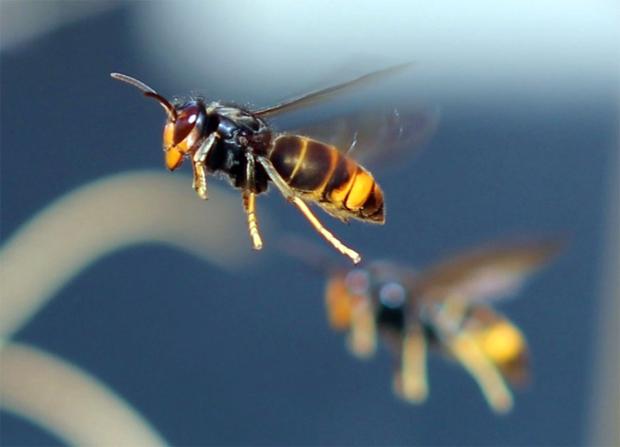
The Asian hornet is primarily a predator of medium to large-sized insects such as flies, social wasps and in particular, honey bees. It is a widespread established species in Asia and was accidentally introduced to Europe where it was first recorded, in southern France, in 2004. Since then it has been found in Spain, Portugal, Belgium, Italy, the Netherlands, Germany, the Balearic Islands and the Channel Islands. From 2016-2020, there have been 18 confirmed sightings of Asian hornet in England; however these have been contained and destroyed and it has not yet become established as an invasive species.
In Northern Ireland, natural barriers – such as the Irish Sea – and more temperate climatic conditions would affect its arrival. However, introduction via shipping of commodities such as wood, soil, fruit and ceramics – as was thought to be the case in France - is a possibility and, if undetected, would present a major threat to NI beekeepers.
You can download information about the Asian hornet from https://invasivespeciesni.co.uk/species-accounts/potential/terrestrial/asian-hornet
Any potential sightings of the Asian hornet in NI can be reported to the Northern Ireland Environment Agency (NIEA) Invasive Non-Native Species team using the following links Asian Hornet Watch App, iRecord /CEDaR online, iRecord App or iNaturalist
Bee research
Within AFBI, our work on honeybees has mainly been statutory although we keep up-to-date with research developments through liaison with the National Bee Unit at the Central Science Laboratory York, Dr Rob Paxton’s bee research group at Queen’s University, Belfast, the Bee Research Unit at Teagasc and discussions with local beekeeping organisations.
National Insect Week
National Insect Week encourages people of all ages to learn more about insects. Every two years, the Royal Entomological Society organises the week, supported by a large number of partner organisations with interests in the science, natural history and conservation of insects.
National Insect Week Returns in 2025 and for more details you can visit the National Insect Week Website
Honeybee husbandry survey Report 2024-25
2024/25 Honeybee Husbandry Survey
Honeybee husbandry survey Privacy Notice
Previous honeybee husbandry surveys
Since 2009, AFBI has conducted an annual survey for all Bee Keepers in Northern Ireland to obtain information on current honeybee husbandry practices in Northern Ireland and to provide baseline data on bee health.
The survey was based on and was in conjunction with a national survey conducted by the National Bee Unit at the Central Science Laboratory, York. The reports for these surveys are available at the link below.
- Honeybee Husbandry Survey winter 23/24
- Honeybee Husbandry Survey winter 22/23
- Honeybee Husbandry survey winter 21/22
- Honeybee Husbandry survey winter 20/21
- Honeybee Husbandry survey winter 19/20
- Honeybee husbandry survey winter 18/19
- Honeybee husbandry survey winter 17/18
- Honeybee husbandry survey winter 16/17
- Honeybee husbandry survey winter 15/16
- Honeybee husbandry survey winter 14/15
- Honeybee husbandry survey winter 13/14
- Honeybee husbandry survey winter 12/13
- Honeybee husbandry survey winter 11/12
- Honeybee husbandry survey winter 10/11
- Honeybee husbandry survey winter 09/10
- Honeybee husbandry survey winter 08/09
All-island pollinator plan
AFBI was involved in the creation of an all-island pollinator plan, which can be viewed or downloaded: All-island pollinator plan
Contact
For more information contact AFBI Bee health